IoT safety system. CIIA finalist.
SafeSense: a fire alarm designed to reach the person who can act.
An ESP8266-based fire and smoke detection system that combines a local alarm with GSM and Wi-Fi notifications. I led the four-person team that designed, built and presented the working prototype.

Overview
A conventional alarm is only useful if somebody can hear it. That is no help if you are at work, asleep two rooms away, or the building is empty. SafeSense detects a potential fire locally and reaches registered contacts remotely, including over GSM when there is no internet.
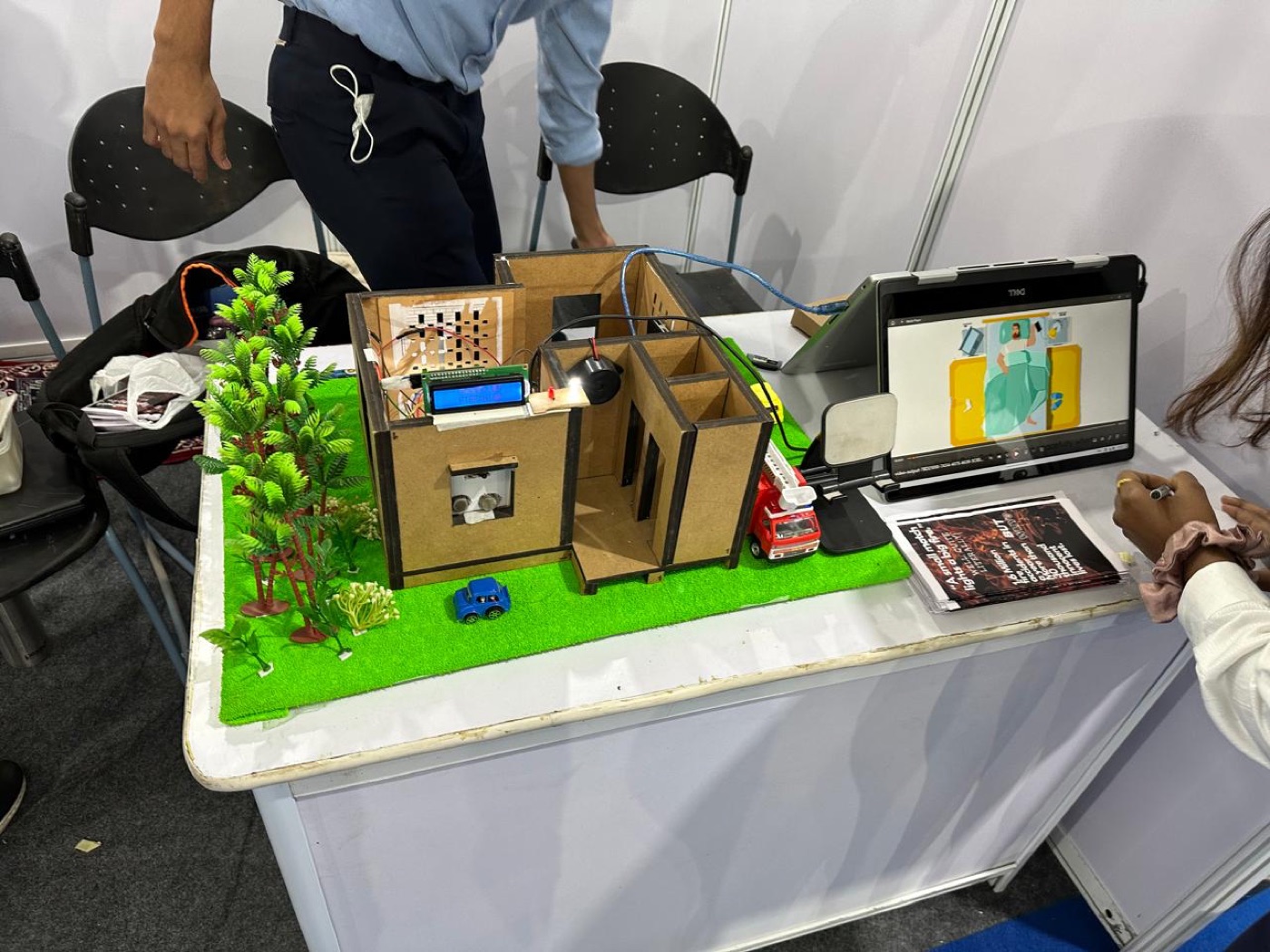
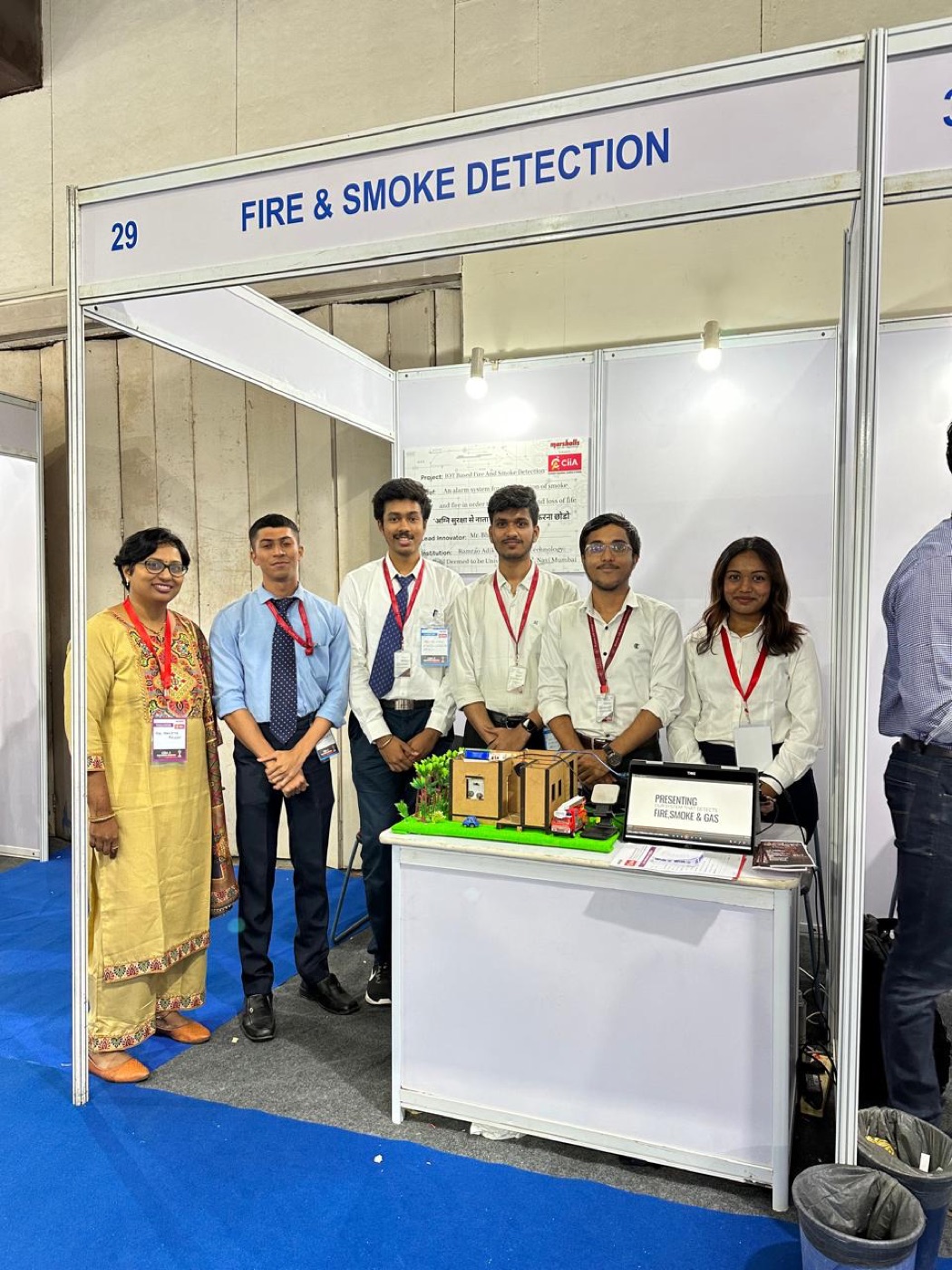
We installed flame and smoke sensors across a scale model of a home. When readings crossed calibrated thresholds, the NodeMCU raised a local alarm and triggered both remote paths at once. The zoned demonstration model let judges trigger detection live, and the project was selected as a finalist at the Creative Ideas & Innovations in Action exhibition.
How it works
- Sensing. An MQ-series smoke sensor and IR flame sensors feed analog and digital signals into the ESP8266.
- Thresholding. Readings are filtered and compared against calibrated thresholds, so cooking smoke does not raise a false alarm.
- Dual alert channels. A GSM module sends SMS to registered numbers while Wi-Fi pushes a parallel notification. Neither path depends on the other.
- Local response. A buzzer and indicator LEDs give an immediate on-site warning.
- Zoned demo rig. A scale model home with separate sensor zones made the behavior testable in front of judges.
Results
What I learned
Real-world systems live on redundancy, calibration and clear failure behavior. A safety system cannot assume one network path will always be available, which is why GSM and Wi-Fi fire in parallel rather than as a fallback chain.
Leading four people through a build and a live demo also taught me to design for the worst demo conditions, not the best ones.
Gallery